
The short answer
Fake orders rise sharply around Black Friday, and Shopify stores are a prime target. One fraud-prevention company saw fraudulent transactions roughly five times higher on Black Friday 2025 than its October baseline.
The best Shopify fraud protection is simple: hold high-risk orders before you ship, use Shopify fraud analysis and Shopify Flow to catch them automatically, cancel and refund suspicious orders before a chargeback arrives, make your charge easy to recognize on a bank statement, and keep proof of delivery for every order you send.
Key takeaways
- Shopify fraud spikes in Black Friday week: about 5x normal on Black Friday 2025, according to SEON.
- A single fraudulent order costs far more than its price. The Shopify chargeback fee is $15 in the US, on top of the lost product and payment.
- Shopify fraud analysis flags risky orders, but it doesn’t cancel them. You have to act.
- Shopify Protect covers eligible fraud chargebacks on Shop Pay orders for US stores using Shopify Payments.
- Card testing bots are a growing problem, so watch for bursts of failed payments.
It’s 2 a.m. on Black Friday. Your phone buzzes.
A $900 order. A brand-new customer, buying four of your best-selling item, with overnight shipping.
You feel that rush. Finally.
Three weeks later, the bank takes the $900 back. Plus a $15 fee. And the products? Long gone (shipped overnight, of course, because you wanted to impress your new customer).
This happens to thousands of Shopify stores every holiday season. Not because the owners are careless, but because Black Friday is the one week when fraudsters know you’re busy, excited and stretched thin. They count on you being too rushed to look closely.
This guide is here to change that. It’s Shopify fraud protection in plain English: no scare tactics, no 40-page security manual. Just the real numbers, the warning signs, and the exact settings to switch on this week.
Not technical? Don’t worry. Every step below comes with a real-life example, so you can see exactly what to do (and what it looks like in your Shopify admin).
How much does Shopify fraud increase around Black Friday 2026?
A lot, and it’s not a guess. Several fraud studies of the 2025 holiday season found the same pattern: fraud jumps hard in Black Friday week and stays high through Cyber Monday. Expect the same in 2026, only better organized.
- About 5x on Black Friday, 4x on Cyber Monday. Fraud-prevention company SEON found fraudulent transactions were roughly five times higher on Black Friday 2025, and four times higher on Cyber Monday, compared with its October baseline. Bot-driven attacks rose by more than 400% during Black Friday week, and the US showed the highest fraud intensity of any region.
- 1.7x a normal four days. Stripe’s analysis of Black Friday and Cyber Monday 2025 found fraud activity reached about 1.7 times the volume of a typical four-day period across the retail stores it studied.
- Smaller, sneakier orders. Sift found the average value of an attempted fraudulent purchase dropped 16% during Black Friday 2025 (from $138 to $116).
That last number matters more than it looks. Fraudsters are going smaller on purpose. A $116 order doesn’t set off alarms the way a $900 order does, and that’s exactly the point. The “obviously fake” order is becoming the quietly fake one.
(And no, fraudsters don’t take Thanksgiving off. Honestly, they might be the only people working harder than you that week.)
What does a fraudulent order cost a Shopify store? (Chargeback fees included)
Far more than the order value. You lose the payment, the product, the shipping and a fee, and you never had a real sale to begin with.
Here’s a simple example. Say a fraudster places a $120 order with a stolen card, and you ship it.
| What happens | What it costs you |
|---|---|
| The real cardholder disputes the charge | The $120 payment goes back to them |
| You already shipped the product | The product is gone (say it cost you $40) |
| You paid for shipping | $10, also gone |
| The bank opens a chargeback | $15 fee with Shopify Payments in the US (returned only if you win) |
| Total | $65 out of your pocket, on a sale that never really existed |
And that’s just the part you can see. Researchers who track the full picture (staff time, fees, operations, replacing stock) put the real cost much higher. LexisNexis Risk Solutions found that US merchants pay $4.61 for every $1 lost to fraud, up 32% since 2022. Its newer North America study puts that figure above $5.
Then there’s the cost that never shows up on a receipt. If too many of your orders turn into chargebacks, your payment provider can restrict or even remove your ability to take card payments. For a small store, that isn’t a bad month.
That’s the whole business on pause.
Types of Shopify fraud to expect on Black Friday 2026
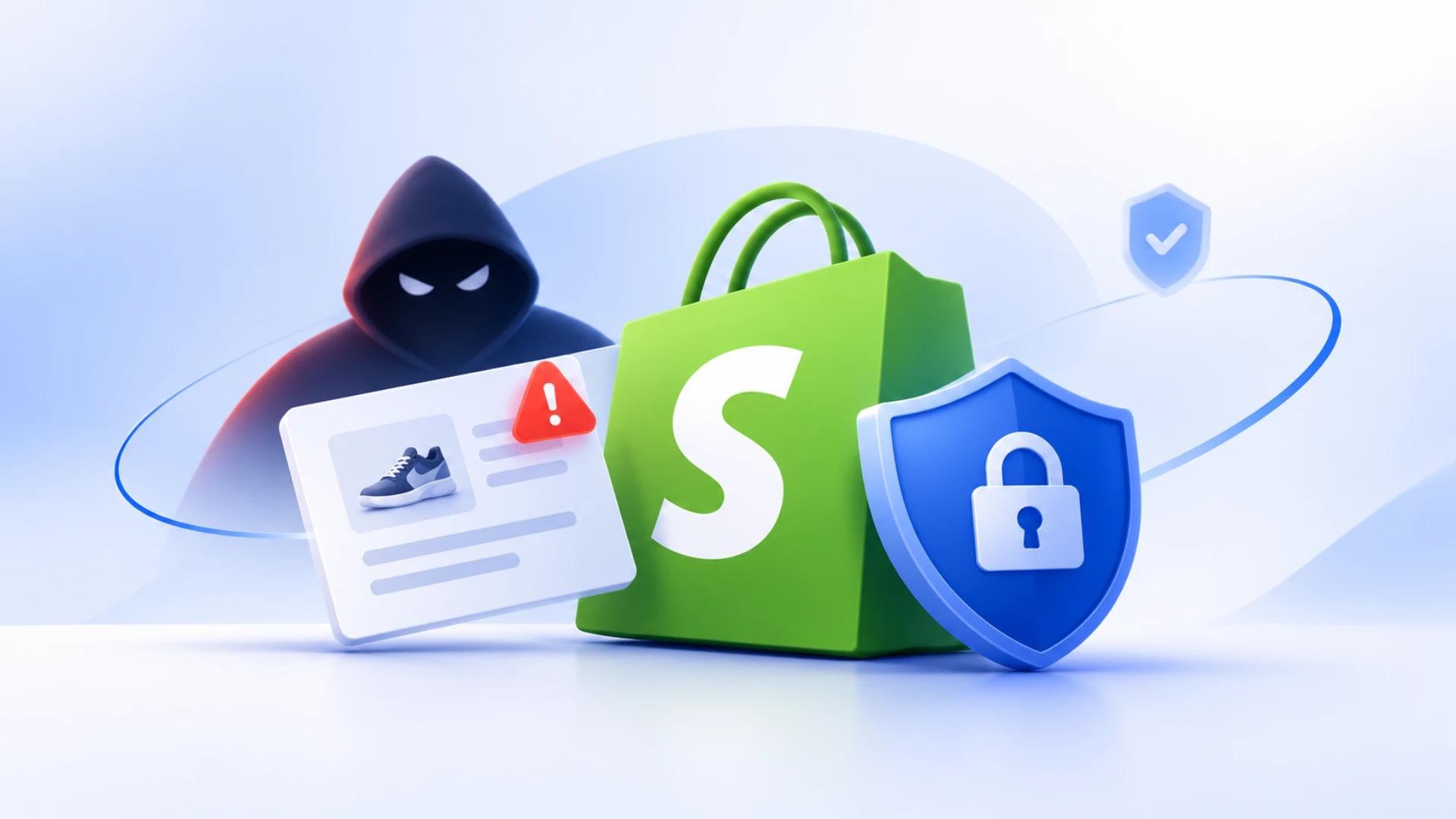
Three types do most of the damage: stolen card orders, “friendly” fraud from real customers, and card testing by bots.
1. Stolen card orders
Someone buys from you with a card that isn’t theirs. You ship. Weeks later, the real cardholder spots the charge and disputes it. The bank sides with the cardholder (they never made the purchase, after all), and you lose the money, the product and the fee.
2. Friendly fraud (a real customer disputing a real purchase)
This one stings, because it comes from actual customers. They bought it, they received it, and then they told their bank they didn’t. Sometimes it’s honest confusion (“I don’t recognize this charge”). Sometimes it’s not honest at all.
“Friendly” is a generous name for it, but it’s a big deal. Mastercard’s 2025 State of Chargebacks report, based on Datos Insights research, found that fraud of one kind or another accounts for about 45% of merchant chargebacks. Research from the same firm puts first-party fraud (real customers disputing real purchases) at 21% of merchant chargebacks, with two-thirds of merchants seeing it grow year over year.
3. Card testing and bot attacks
Bots try dozens, sometimes hundreds, of small payments on your checkout to find out which stolen cards still work. You’ll usually notice a burst of failed payments in a few minutes, tiny orders for your cheapest product, and strange email addresses.
Example: what card testing looks like
It’s 4:12 a.m. In six minutes, your store gets 38 payment attempts for the same $4.99 keychain. 35 fail. 3 go through. Every email address looks like a random string of letters.
What to do: don’t ship the 3 orders. Cancel and refund them, then follow Shopify’s guide to responding to card testing.
Even when most attempts fail, it hurts. It clogs your orders, it can draw extra attention from your payment provider, and the cards that “pass” the test often come back later for a much bigger order.
Why do smart store owners still ship risky orders on Black Friday?
Because Black Friday messes with how we make decisions. It isn’t a knowledge problem. It’s a pressure problem.
- The excitement effect. A big order feels like proof your ads are finally working. You want it to be real, so your brain quietly skips the warning signs.
- Fear of insulting a real customer. Cancelling feels rude. What if it’s a genuine fan buying gifts?
- Speed. With 300 orders to pack, checking each one feels impossible. So you check none.
- Hopeful reading. “Shopify said medium risk, not high. Probably fine.” (It often is. Sometimes it really isn’t.)
Here’s a reframe that helps. You’re not choosing between trusting customers and suspecting them. You’re choosing between a two-minute check now and a three-week headache later.
How to spot fraudulent orders on Shopify before Black Friday 2026
No single sign proves an order is fake. But when two or three show up together, stop and check before you ship.
| Warning sign | Why it matters |
|---|---|
| Billing and shipping addresses far apart (especially different countries) | Stolen cards are usually shipped somewhere far from the real cardholder |
| Rush or overnight shipping on a first order | Fraudsters want the goods before the card gets reported |
| Several units of your most expensive item | Expensive items are easy to resell |
| Many orders or failed payments from one email, card or device in minutes | A classic sign of card testing |
| Several different cards tried on one order | They’re trying stolen cards until one works |
| An email that looks random or doesn’t match the name | Often a throwaway address made for one order |
| Shipping to a freight forwarder or reshipping service | Hides where the goods are really going |
| Shopify marks the order as medium or high risk | Shopify’s fraud analysis has spotted something; combine it with the signs above |
A note on fairness: people travel, send gifts and move house. Plenty of real customers trip one of these signs. That’s why the move is to verify, not accuse. A quick, friendly email (“Just confirming your order before we ship!”) costs you nothing. Real customers reply. Fraudsters usually vanish.
Let’s practice. Two orders arrive on Black Friday morning. Which one would you check before shipping?
| Order A | Order B | |
|---|---|---|
| Order value | $64 (one hoodie) | $612 (six of your best-selling jacket) |
| Customer | Returning customer, third order | New customer |
| Addresses | Billing and shipping both in Texas | Billing in Ohio, shipping to a reshipping warehouse in Florida |
| Shipping | Standard | Overnight |
| Payment | Paid on the first try | Third card tried, two declined |
| Shopify fraud analysis | Low risk | High risk |
Order A is almost certainly fine. Ship it. Order B has five warning signs at once. Hold it, email the customer, and if you don’t get a convincing reply within a day, cancel and refund it.
Shopify fraud prevention for Black Friday 2026: 8 steps to set up now
Set up these eight things this week. Most of them take under 15 minutes, and almost all are free with Shopify.
1. Use Shopify fraud analysis on every flagged order
Shopify runs fraud analysis on your orders and shows it on the order page: a low, medium or high risk rating, plus the reasons behind it. Medium and high risk orders get a warning symbol on your Orders page.
Seen the message “High risk of fraud detected” on a Shopify order? That’s Shopify fraud analysis telling you several warning signs showed up at once (for example, a billing address that doesn’t match the card, or a payment from a risky connection). Read the listed reasons before you decide.
One thing many owners don’t realize: Shopify flags the risk, but it doesn’t cancel the order for you. The decision (and the loss, if you get it wrong) is yours.
Example: reading a flagged order
Where to look: Shopify admin → Orders → open the order → find the Order risk section → click the icon to see the full analysis.
What you might see: “High risk.” Billing address doesn’t match the card’s address. Payment came from a proxy or VPN. Several cards were tried.
What to do: don’t fulfill yet. Email the customer to confirm the order. No reply, or a reply that doesn’t add up? Cancel and refund.
Try it yourself (takes 2 minutes)
Want to see what a high-risk order looks like before Black Friday? Shopify lets you simulate one. Place a test order using the email shopify.test.high@shopify.com and Shopify will mark it as high risk. It’s also the easiest way to check your Flow rule (step 2) actually works. Details are in Shopify’s fraud analysis guide.
2. Let Shopify Flow catch risky orders automatically
Shopify Flow is Shopify’s free automation app. Set up one simple workflow before Black Friday:
- When an order is marked high risk,
- then hold fulfillment, tag the order “fraud-check”, and email you (or your team).
Now a risky order can’t slip out the door while you’re busy packing the other 299.
Example: your Flow workflow, step by step
Start (trigger): “Order risk analyzed”. This runs as soon as Shopify finishes checking an order.
Check (condition): risk level is High.
Then (actions): hold fulfillment, add the tag fraud-check, and send an internal email to you saying “High-risk order to review.”
Each morning of Black Friday weekend, filter your orders by the tag fraud-check and review them over coffee. Five minutes, done.
3. Build custom fraud rules (Shopify fraud prevention without an extra app)
Shopify recently added a rule builder to Shopify Protect, its fraud and dispute toolkit, so you can write and test your own fraud rules right in your admin. Use it to block known bad actors at checkout (for example, an email address or IP address that already hit you with a chargeback).
Example: a simple rule to start with
Last month, someone used a stolen card and filed a chargeback with the email fastdeals.2210@…. Add that email address to a blocking rule. If they try again on Black Friday, they’re stopped at checkout, before an order (and a problem) ever exists.
You also get some protection without lifting a finger. Shopify says Shopify Payments blocks more than 12,000 high-risk payments every minute, at no extra cost.
4. Use Shopify Protect on Shop Pay orders (US stores)
If your store is in the US and uses Shopify Payments, Shopify Protect can cover eligible fraud chargebacks on Shop Pay orders. When a covered order is disputed as fraud, Shopify reimburses the order amount and the $15 chargeback fee.
Know the limits, though. It covers fraud disputes only, not “item not received” or “not as described”. Orders flagged as high risk at checkout aren’t covered either. Check the current rules on Shopify’s Shopify Protect page and its list of conditions before you rely on it.
Example: what is covered and what isn’t
Covered: a $200 order paid with Shop Pay. Weeks later, the cardholder tells their bank, “I never made this purchase.” If the order was eligible, Shopify pays you back the $200 and the $15 fee.
Not covered: the same order, but the customer says, “It never arrived.” That’s not fraud, so it’s on you. This is why tracking matters (step 7).
5. Cancel and refund suspicious orders fast
If an order looks wrong and you can’t verify it, cancel and refund it before you ship, and before a chargeback arrives. Shopify’s own support team recommends this for high-risk orders. A refund costs you a sale that probably wasn’t real. A chargeback costs you the sale, the fee, and a mark on your record.
Example: a friendly verification email you can copy
Subject: Quick check before we ship your order #1042
“Hi Sarah, thanks so much for your order! Before we send it out, could you reply to confirm your shipping address and the last 4 digits of the card you used? We do this for some orders to keep our customers safe. Thanks, the [Store Name] team.”
Real customers usually reply within hours (and appreciate the care). No reply in 24 hours? Cancel and refund.
6. Make your charge easy to recognize
A lot of “friendly” fraud starts with a customer looking at their bank statement and thinking, “What’s this?” Then they tap “dispute” in their banking app, which takes about four seconds.
Fix it at the source. In your Shopify Payments settings, set your statement descriptor (the name customers see on their bank statement) to the store name people actually know. Make sure your order confirmation email clearly shows your logo, your store name and what they bought.
Example: good vs. bad statement descriptor
Your store is called Glow Skin Co.
Bad: “GSC LLC 4471”. The customer has no idea what this is, so they dispute it.
Good: “GLOWSKINCO”. They instantly remember their order.
Keep it short. Shopify Payments only allows a limited number of characters (around 19), and anything longer gets cut off.
7. Ship with proof
Use tracking on every order. For expensive orders, require a signature on delivery (pick your own threshold, say anything above $250). Keep every customer message.
Example: a simple shipping rule
Orders under $250: standard tracked shipping. Orders over $250: tracked shipping plus signature on delivery. That one rule turns “I never got it” disputes from your word against theirs into a signed receipt.
Why bother? Because evidence is what wins disputes. According to Mastercard figures, merchants win only about half of the disputes they fight. Proof of delivery is what pushes you onto the winning side.
8. Answer customers fast
Here’s something most fraud guides skip. Many disputes start as a simple “Where’s my order?” email that nobody answered. If a customer can’t reach you, their bank is one tap away. A fast reply is cheaper than any fraud tool.
Example: an auto-reply that stops disputes before they start
“Thanks for reaching out! We’re handling a lot of Black Friday orders, but a real person will reply within 12 hours. Track your order anytime here: [your tracking link].”
It takes five minutes to set up, and it tells worried customers you’re real, reachable and on it.
What a Black Friday 2026 store audit looks like (sample report)
A good store audit doesn’t hand you a 50-page PDF. It shows you the few things that are costing you money, ranked by how much they matter, with a clear fix for each one.
Here’s a sample of what our audit report looks like. (These are example findings to show the format, not results from a real store.)
| Area | What we check | Sample finding | The fix |
|---|---|---|---|
| Fraud settings | Fraud analysis, Flow rules, custom fraud rules | High-risk orders ship automatically, with no hold | Add a Flow rule to hold and tag high-risk orders |
| Checkout | Payment options, surprise costs, mobile checkout | Shipping cost appears for the first time at checkout | Show shipping on product pages and in the cart |
| Disputes | Statement descriptor, order emails, proof of delivery | Bank statement shows a name customers don’t recognize | Change the descriptor to your store name |
| Apps and access | Unused apps, app permissions, staff accounts | 6 unused apps still have access to customer data | Remove them and review staff permissions |
| Speed | Mobile load time, leftover app code | Product pages load slowly on phones | Remove leftover scripts and compress images |
| Ad tracking | Facebook vs Shopify numbers | Facebook reports more purchases than Shopify | Fix tracking before raising Black Friday budgets |
Every finding comes with a priority (fix now, fix this week, fix after Black Friday), so you know exactly where to spend your limited time in November.
Do you need a Shopify fraud prevention app?
Most small stores don’t, at least not yet. Shopify’s built-in fraud analysis, Flow, custom fraud rules and Shopify Protect cover the basics for free.
A paid Shopify fraud prevention app (Signifyd, NoFraud, ClearSale and Riskified are common names) can make sense when:
- you sell expensive products that are easy to resell,
- you already get chargebacks every month, even with Shopify’s tools switched on, or
- you handle so many orders that checking flagged ones by hand isn’t realistic.
Some of these apps offer a chargeback guarantee (they pay you back if an order they approved turns out to be fraud). Compare the fee against what chargebacks actually cost you before you sign up. And set up the free tools first: an app on top of bad settings is still bad settings.
Got a Shopify chargeback during Black Friday 2026? Here’s what to do
Don’t panic, and don’t refund. Respond with evidence before the deadline in your Shopify admin.
- Don’t issue a refund once a chargeback is open. The bank now makes the decision. Shopify’s support team advises against refunding at this stage.
- Check the reason. “Fraudulent”, “not received” and “not as described” need different evidence.
- Gather your proof: order details, tracking showing delivery, signature (if you have one), customer messages, and your refund and shipping policies.
- Submit before the deadline. You’ll see it on the chargeback in your Shopify admin. Miss it, and you lose automatically.
- Learn from it. Tag the customer, add their email to your fraud rules, and check whether a warning sign was there all along.
Example: what to send for each type of chargeback
“I didn’t make this purchase” (fraud): proof the billing and shipping addresses matched, the customer’s order history, and any emails where they confirmed the order.
“It never arrived” (not received): tracking showing “Delivered”, the delivery date, and the signature if you have one.
“Not what I ordered” (not as described): your product page, photos of what you shipped, and your returns policy.
A quick reality check: you won’t win them all. With merchants winning roughly half of disputed chargebacks, prevention will always be cheaper than winning.
Can fraud protection hurt your Black Friday 2026 sales?
Yes, if you overdo it. Blocking every out-of-state address or cancelling every medium-risk order means turning away real customers in your best sales week of the year.
The goal isn’t zero fraud. It’s catching the obvious cases without making good customers jump through hoops. A simple rule that works for most small stores:
- Low risk: ship as normal.
- Medium risk: send a friendly confirmation email before shipping.
- High risk plus another warning sign: cancel and refund.
Your 10-minute Black Friday 2026 fraud checklist
Do these before Black Friday week (Black Friday is November 27, 2026, and Cyber Monday is November 30):
- Open your last 10 flagged orders and read Shopify’s fraud analysis on each one
- Create a Shopify Flow workflow that holds and tags high-risk orders
- Add any emails or IP addresses from past chargebacks to your fraud rules
- Check your statement descriptor shows the store name customers know
- Turn on tracking for every order, and signature for expensive ones
- Write a short, friendly “confirming your order” email template
- Decide who replies to customer messages during Black Friday weekend
- Make sure Shop Pay is switched on (if you’re a US store using Shopify Payments)
Shopify fraud and chargebacks: frequently asked questions (2026)
Does Shopify automatically cancel fraudulent orders?
No. Shopify rates orders as low, medium or high risk and shows the reasons, but you decide whether to ship, verify or cancel. Shopify Payments can block some high-risk payments at checkout before they become orders.
How much is a chargeback fee on Shopify?
With Shopify Payments in the US, the fee is $15 per chargeback. You get it back only if you win the dispute.
What is Shopify Protect?
Shopify Protect is Shopify’s fraud and dispute toolkit. For eligible US stores using Shopify Payments, it reimburses the order amount and the $15 fee on fraud chargebacks for qualifying Shop Pay orders. It doesn’t cover non-fraud disputes like “item not received”.
Should I refund an order after a chargeback is filed?
No. Once a chargeback is open, the bank decides the outcome. Respond with evidence instead. Refund suspicious orders before a chargeback is filed, not after.
What does “high risk of fraud detected” mean on Shopify?
It means Shopify’s fraud analysis found several warning signs on the order, such as mismatched addresses or a risky connection. It doesn’t cancel the order. Read the reasons, verify with the customer, or cancel and refund before you ship.
Does Shopify have bot protection?
Shopify Payments automatically blocks many high-risk payment attempts at checkout (Shopify says more than 12,000 every minute). If you see a sudden burst of failed payments, which can mean card testing, contact Shopify Support and add custom fraud rules to block the source.
Do I need a Shopify fraud prevention app?
Not always. Start with Shopify’s free tools. Consider a paid app if you sell expensive, easy-to-resell products, already get chargebacks every month, or have too many orders to review by hand.
What is card testing?
Card testing is when bots make many small payment attempts on your checkout to find out which stolen cards still work. Watch for bursts of failed payments, tiny orders and random-looking email addresses.
When should I set up fraud protection for Black Friday?
This week. Black Friday 2026 is November 27, and fraud starts rising in the days before it. Setting up rules during the rush is much harder than setting them up now.
The bottom line for Black Friday 2026
Black Friday will probably be your biggest week of the year. Fraudsters know that too. You don’t need expensive software or a security team to stay safe. You need a few smart settings, a two-minute check on risky orders, and the confidence to say “not this one”.
Running Facebook or Instagram ads this Black Friday? Read our guide to Black Friday Facebook ads for Shopify: why ad costs spike, why late starters pay the most, and a week-by-week plan.
Protect the week. Keep the profit.
Sources
- SEON, Black Friday & Cyber Monday: A Data-Driven Report for eCommerce
- Sift, Black Friday 2025 Fraud Trends
- Stripe’s 2025 Black Friday and Cyber Monday analysis, as summarized by Symmetric Group
- LexisNexis Risk Solutions, True Cost of Fraud Study: Ecommerce and Retail, US and Canada (2025)
- Vision Monday, on the newer LexisNexis True Cost of Fraud North America study
- The Fintech Times, on Mastercard and Datos Insights’ 2025 State of Chargebacks report
- Datos Insights, When Customers Become Fraudsters: The Hidden Cost of First-Party Fraud
- Inside Retail (Worldpay), on chargeback win rates
- Dynamic Business, Five things changing for Shopify merchants this quarter
- Kount, Shopify chargebacks guide
- Shopify Community, chargeback fees and high-risk order guidance
- Shopify Help Center: Fraud analysis
- Shopify Help Center: Responding to card testing
- Shopify Help Center: Shopify Protect for Shop Pay
- Shopify Help Center: Protecting orders from fraud
- Shopify Flow: Order risk analyzed trigger

Abdul Jamil Ajmal
Abdul Jamil Ajmal is an e-commerce growth and operations strategist with 12+ years of experience, including extensive work with Daraz. He has helped brands like Uptown L.A, Muicin, Emelie and RELAX establish their marketplace presence and achieve up to 4X sales growth. His expertise covers the full e-commerce lifecycle: vendor acquisition, cross-docking, sourcing, dropshipping, vendor management, marketplace operations, performance marketing and business scaling, from strategy and setup to execution and management.